laisser un message
Si vous êtes intéressé par nos produits et souhaitez en savoir plus, veuillez laisser un message ici, nous vous répondrons dès que possible.
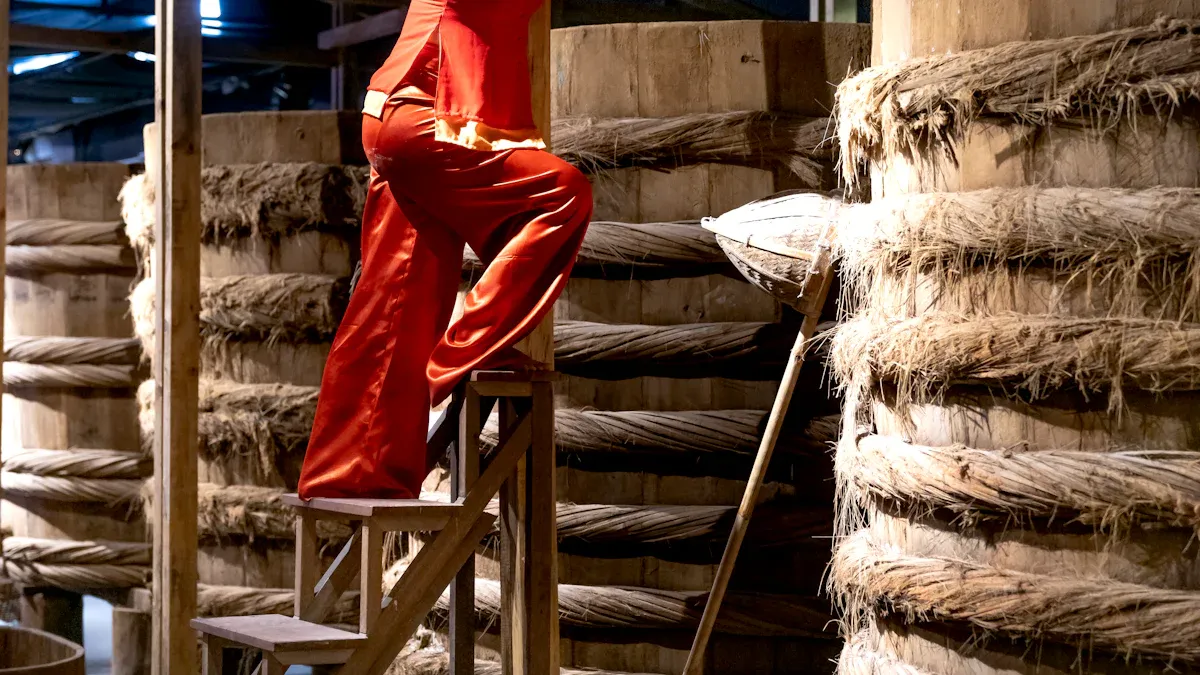
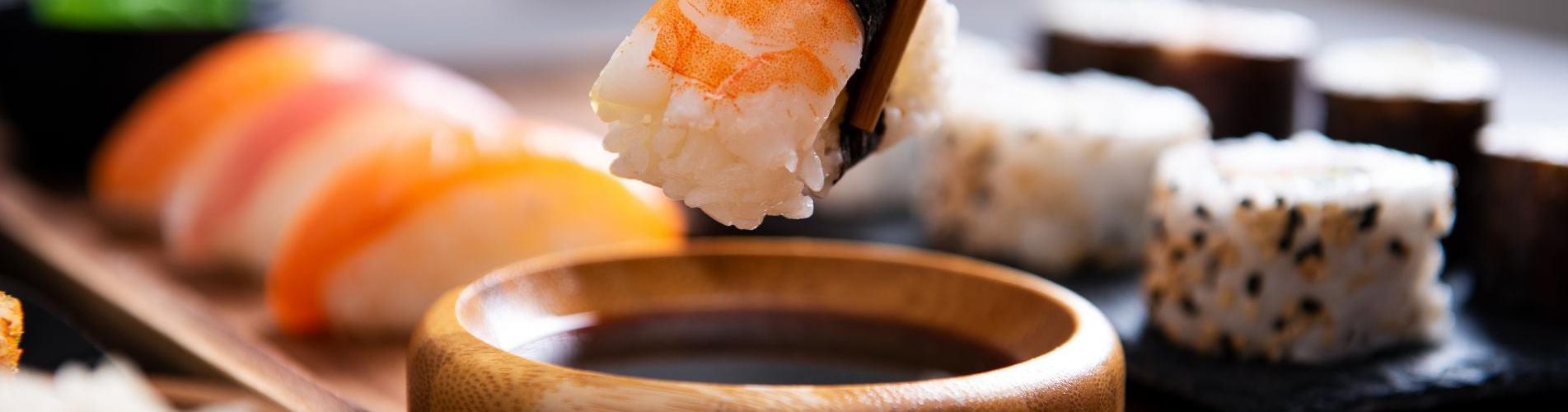
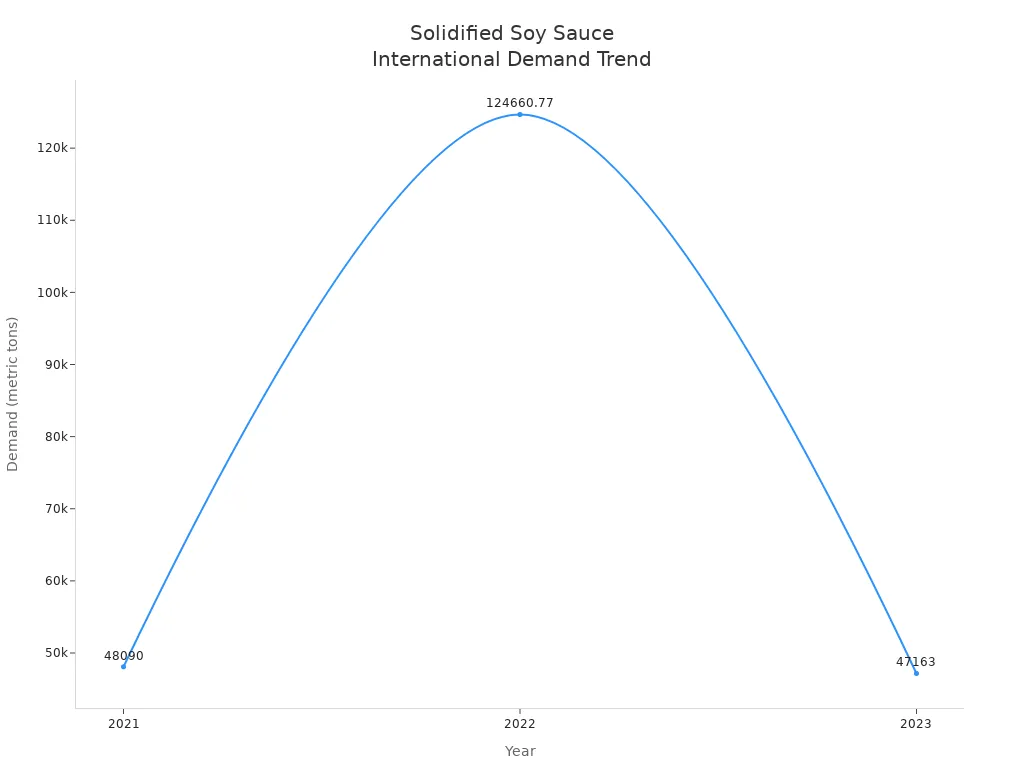
Vous voyez de la sauce soja solidifiée fabriquée dans une usine dotée de technologies de pointe. Ces usines utilisent des procédés intelligents pour transformer le soja et le blé en un produit facile à utiliser. Parmi les étapes importantes, on peut observer la préparation des ingrédients, la fermentation ou l'hydrolyse, la solidification, le séchage et le conditionnement. Une usine de sauce soja solidifiée confère à vos aliments une saveur particulière et garantit leur sécurité alimentaire. Au cours des dix dernières années, usine de sauce soja solidifiée Ces modifications ont été apportées pour répondre à une demande accrue provenant d'autres pays, même si les Japonais les consomment moins.
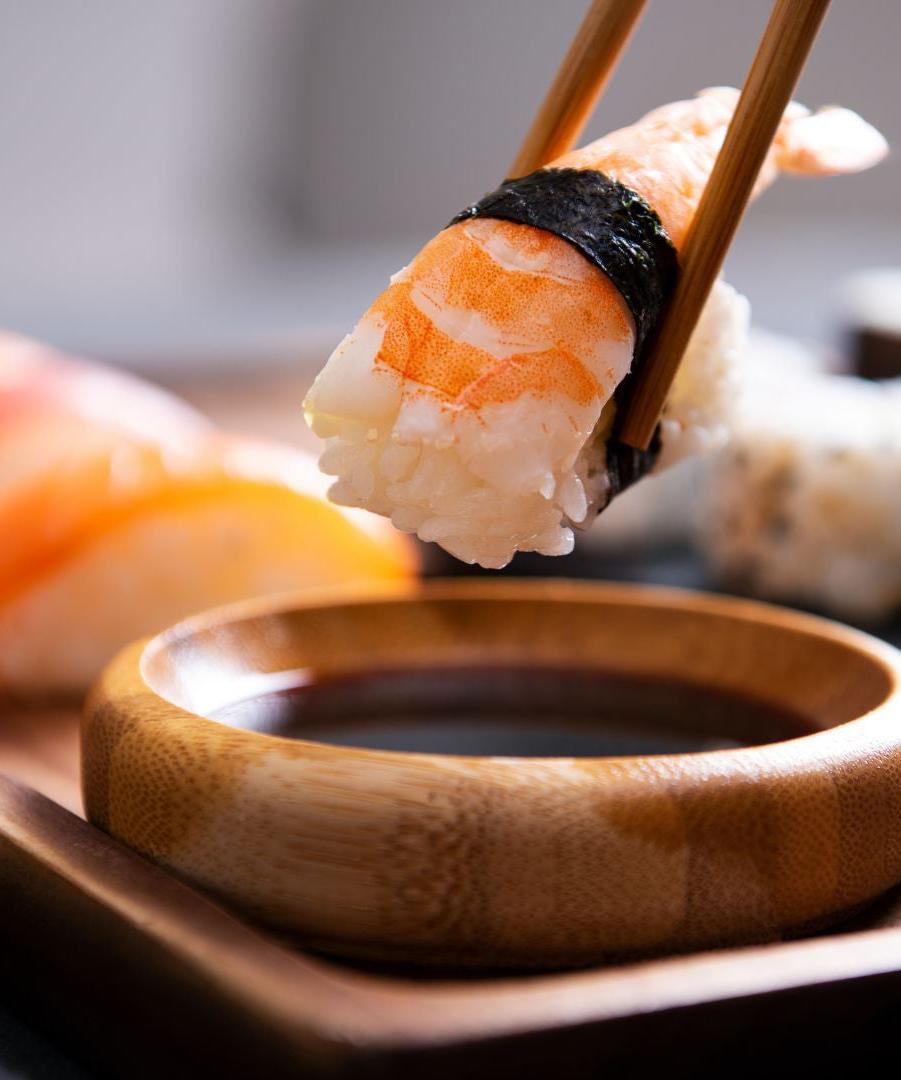
Une usine de sauce soja solidifiée est aujourd'hui essentielle à la fabrication de la sauce soja et continue de transformer l'industrie alimentaire.
La sauce soja solidifiée est initialement liquide. Elle se transforme en solide grâce à un procédé spécifique, ce qui facilite son stockage et son utilisation.
Pour une saveur prononcée, il faut de bonnes graines de soja, du blé et du sel. Choisissez toujours des ingrédients frais et propres pour une sauce soja optimale.
Les usines modernes combinent des méthodes de fermentation traditionnelles et des machines modernes. Cela permet de produire la sauce soja rapidement, tout en garantissant sa qualité et son goût constants.
La sauce soja solidifiée s'utilise dans de nombreux plats. Elle rehausse la saveur des soupes et des en-cas. Pratique en voyage, elle ne risque pas de se renverser.
Il est essentiel de bien la conserver. Gardez la sauce soja solidifiée dans un endroit frais et sec. Assurez-vous que le récipient soit bien fermé pour préserver sa saveur.
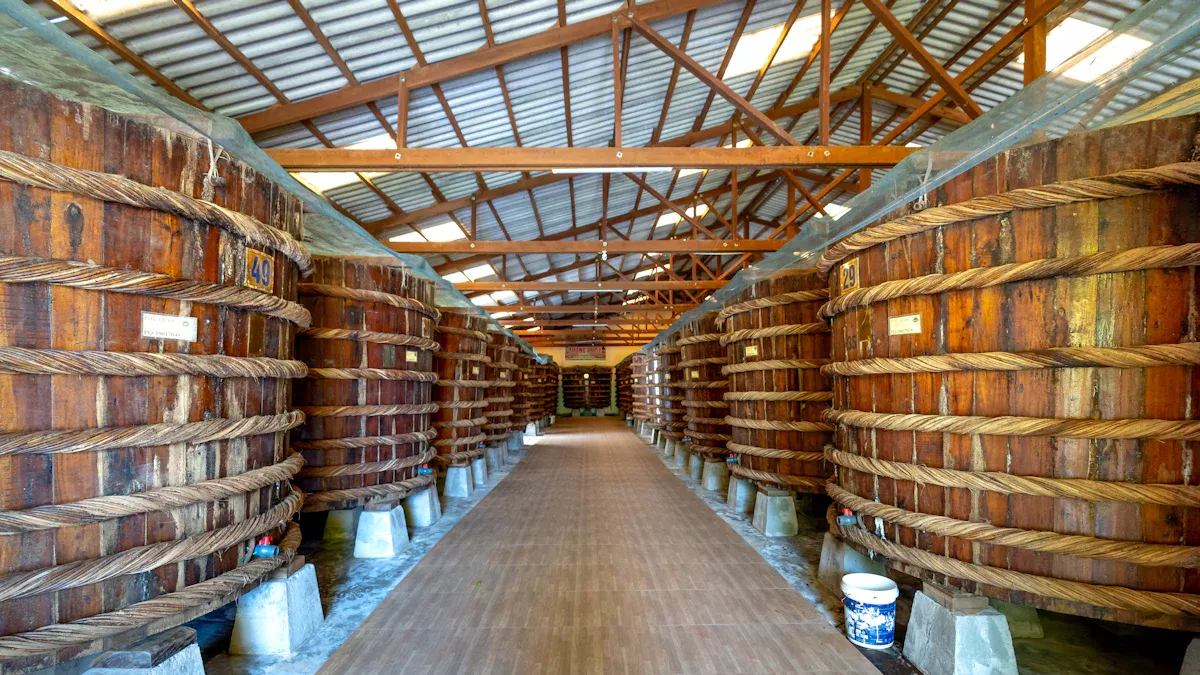
Vous vous demandez peut-être ce qu'est la sauce soja solidifiée. Elle est initialement liquide et se solidifie grâce à un procédé spécifique. Les usines utilisent des machines pour éliminer l'eau tout en préservant son goût prononcé. Cela facilite son stockage et son utilisation. La sauce soja solidifiée conserve toute sa saveur. Elle se présente sous forme de poudre ou de bloc. Pour en savoir plus, consultez… Sauce soja solidifiée et voyez comment cela vous aide à cuisiner.
Une usine de sauce soja solidifiée utilise une technologie de pointe pour fabriquer ce produit. Ouvriers et machines travaillent de concert pour produire un assaisonnement sûr et savoureux. Ces usines jouent un rôle essentiel dans l'industrie agroalimentaire. Elles permettent aux restaurants et aux entreprises du secteur d'obtenir un goût constant.
La sauce soja solidifiée s'utilise dans de nombreux plats. Les chefs l'ajoutent aux soupes, aux sauces et aux en-cas. Vous pouvez en saupoudrer sur du pop-corn ou l'incorporer à des nouilles. Elle se marie parfaitement aux préparations sèches et aux plats cuisinés. Fini les soucis de déversements !
Les usines de transformation de sauce soja proposent une large gamme de produits. Vous y trouverez différentes sauces soja et assaisonnements. Voici un tableau présentant quelques produits courants :
|
Catégorie de produits |
Produits |
|---|---|
|
Style industriel concentré |
|
|
Sauce soja ordinaire |
Sauce soja foncée, sauce soja claire, sauce soja à faible teneur en sodium, sauce soja biologique, sauce soja assaisonnée, sauce soja sans gluten et à faible teneur en sel |
|
Assaisonnement |
Sucre, vinaigre, pâte de sauce, vin de cuisine, glutamate monosodique, huile de sésame, vermicelles et nouilles, aliments fermentés et conserves, poudre de poulet, huile de piment |
|
Nouveaux produits |
Sauce soja solidifiée, Poudre de sauce sojaSauce soja concentrée |
Astuce : La sauce soja solidifiée est idéale pour les voyages ou la cuisine en plein air. Légère et sans risque de fuite, elle est parfaite pour les petites faims.
Comme vous pouvez le constater, une usine de sauce soja solidifiée vous offre un large choix. Vous y trouverez des produits pour la cuisine maison ou professionnelle.
Pour réussir une sauce soja solide de qualité, il est essentiel de choisir les bons ingrédients. Les principaux ingrédients sont le soja, le blé et le sel. Chacun contribue de manière spécifique au goût et à la texture finale. Vous pouvez consulter leur rôle dans le tableau ci-dessous :
|
Matière première |
Rôle dans la production de sauce soja |
|---|---|
|
Soja |
Fournir des protéines pour la saveur |
|
Blé |
Contribue au parfum |
|
Sel |
Contrôle la fermentation et prévient la détérioration |
Le soja fournit les protéines qui se décomposent lors de la fermentation. Le blé apporte une douceur naturelle et un arôme riche. Le sel ne se contente pas d'ajouter du goût : il crée une saumure qui favorise la croissance des bonnes bactéries et empêche celle des bactéries nocives. L'eau est également essentielle, car elle sert à faire tremper le soja et à préparer la saumure. La qualité de ces ingrédients détermine la saveur finale. En utilisant du soja frais et du blé propre, on obtient un goût plus riche et plus intense. Le sel et l'eau doivent être purs pour éviter tout goût indésirable.
Conseil : Choisissez toujours des ingrédients de haute qualité pour obtenir les meilleurs résultats en matière de sauce soja solidifiée.
Avant de commencer la fermentation, il est nécessaire de préparer les ingrédients. Commencez par cuire à la vapeur ou torréfier le soja et le blé. Cette étape les ramollit et les prépare pour la suite. Ensuite, mélangez le soja cuit et le blé torréfié dans les proportions adéquates. Laissez refroidir le mélange à environ 30 °C (86 °F). Ajoutez ensuite les spores de koji. Le koji est une moisissure particulière qui contribue à décomposer l'amidon et les protéines. Répartissez le koji uniformément et laissez-le se développer en fines couches. Maintenez une température entre 28 et 36 °C et une humidité élevée pendant trois jours. Le koji modifie le mélange et confère à la sauce soja solidifiée sa saveur unique.
La saumure est également importante lors de la pré-transformation. On mélange du sel et de l'eau pour obtenir une saumure à 17-24 % de sel. Cette saumure crée un environnement idéal pour la fermentation. Elle favorise la croissance des bons micro-organismes et inhibe celle des nuisibles. Le koji se développe de façon optimale dans ce milieu salé, garantissant ainsi que votre sauce soja solidifiée acquière le goût recherché et reste saine.
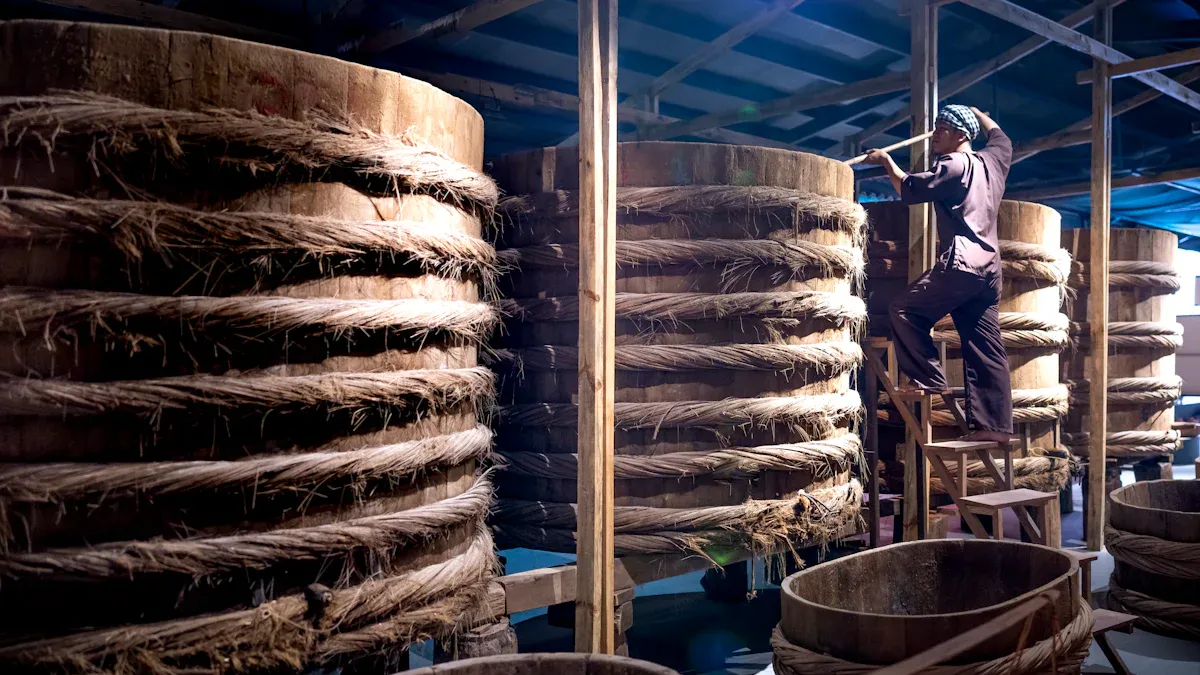
Vous vous demandez peut-être comment la sauce soja est fabriquée aujourd'hui. Les usines combinent méthodes traditionnelles et machines modernes. Tout d'abord, les ouvriers préparent le soja et le blé, qu'ils nettoient soigneusement. Ensuite, ils les cuisent à la vapeur ou les torréfient. Puis, ils ajoutent du koji ou procèdent à une hydrolyse acide. Après cela, ils mélangent le tout avec de la saumure. C'est le début de la maturation. Les ouvriers extraient ensuite la sauce soja du mélange et la transforment en poudre ou en blocs. Les dernières étapes sont le séchage et le conditionnement.
Soja et blé propres.
Cuisez-les à la vapeur ou faites-les rôtir.
Ajouter du koji ou utiliser l'hydrolyse acide.
Mélanger avec de la saumure pour faire vieillir.
Retirez la sauce soja.
Rendez-le solide.
Séchez-le et emballez-le.
Les machines garantissent propreté et rapidité. Vous obtenez ainsi une sauce soja au goût toujours identique. La technologie permet de contrôler la chaleur, l'humidité et le temps de cuisson. Cela préserve l'intensité et la qualité de la saveur.
Les usines utilisent deux méthodes principales pour fabriquer la sauce soja : la fermentation et l’hydrolyse acide. La fermentation utilise le temps et la moisissure koji pour développer une saveur riche. On mélange des graines de soja, du blé et du sel. La moisissure koji se développe dans ce mélange. Le tout repose pendant des mois, voire une année. Des enzymes décomposent les protéines et l’amidon, ce qui confère à la sauce soja sa saveur umami et son arôme agréable.
L'hydrolyse acide est beaucoup plus rapide. On fait bouillir de la farine de soja avec de l'acide chlorhydrique. Ensuite, on ajoute de l'hydroxyde de sodium pour la rendre inoffensive. On filtre et on purifie le liquide. Les usines ajoutent ensuite du sel, du caramel et du sirop de maïs. Cela améliore le goût et la couleur. Ce procédé évite la fermentation. La saveur est moins prononcée. La production ne prend que quelques jours.
|
Aspect |
Méthode de fermentation |
Méthode d'hydrolyse acide |
|---|---|---|
|
Processus de production |
Cela prend des mois ou une année. |
Cela ne prend que quelques jours. |
|
Saveur et arôme |
Umami profond, parfum agréable |
Salé, peu odorant, on peut ajouter des exhausteurs de goût. |
|
Sécurité |
Sain et sans résidus |
Peut contenir des résidus nocifs comme le 3-MCPD |
|
Coût |
Ça coûte plus cher, ça prend plus de temps |
Moins cher, plus rapide |
La fermentation offre un meilleur goût et est plus sûre. L'hydrolyse acide est rapide, mais moins savoureuse. Les usines choisissent la méthode en fonction de leurs besoins.
Remarque : La sauce soja fermentée naturellement est fabriquée exclusivement à partir de graines de soja. Aucun produit chimique n’y est ajouté. Cela lui confère un goût complexe. La sauce soja chimique, quant à elle, est obtenue par hydrolyse acide. Le procédé est plus rapide, mais peut contenir des substances indésirables.
Après maturation et extraction de la sauce soja, celle-ci est solidifiée. Des machines éliminent l'eau du liquide, préservant ainsi son goût intense et facilitant sa conservation. Les usines utilisent la pulvérisation ou la lyophilisation pour transformer le liquide en poudre ou en blocs, garantissant ainsi la préservation de la saveur et la sécurité alimentaire.
Les ouvriers contrôlent la température et l'humidité pendant le séchage. Cela préserve la fraîcheur du goût et empêche la détérioration. La sauce soja solidifiée conserve longtemps sa saveur. Vous pouvez l'utiliser dans de nombreux plats. Vous n'avez plus à craindre les déversements.
Une fois le séchage terminé, les ouvriers conditionnent la sauce soja. Ils utilisent des sachets scellés ou des récipients hermétiques. Cela empêche l'eau et l'air de pénétrer, préserve le goût et garantit la sécurité du produit.
Une bonne conservation est importante pour la sécurité et le goût. Vous devriez :
Conserver la sauce soja dans un endroit frais et sec.
Bien refermer le récipient après usage.
Tenir à l'écart de la chaleur et de la lumière.
Vérifiez la présence de moisissures si le stockage a lieu dans des endroits chauds et humides.
En suivant ces conseils, la saveur restera intense et le produit restera propre à la consommation. Même si la sauce soja solidifiée est riche en sel, elle peut se détériorer si elle n'est pas bien conservée.
Conseil : Refermez toujours bien le récipient. Conservez-le à l’abri de la chaleur et de la lumière. Cela permettra de préserver au mieux sa saveur.
Vous savez maintenant comment la sauce soja est fabriquée en usine. Le procédé combine des méthodes traditionnelles et des machines modernes. Vous obtenez ainsi une sauce soja savoureuse, sûre et facile à utiliser.
Lorsque vous goûtez la sauce soja solidifiée, vous remarquez une saveur particulière. Cette saveur provient d'un processus de fabrication rigoureux. Les ouvriers utilisent des méthodes innovantes pour préserver l'intensité et la constance du goût. L'umami est immédiatement perceptible. Des acides et des composés aromatiques spécifiques y contribuent.
Les acides organiques comme l'acide citrique donnent un goût acide.
L'acide succinique intensifie l'umami et adoucit le goût salé.
Une bonne sauce soja contient plus de 170 composés aromatiques, dont des alcools, des esters et des aldéhydes. Certains, comme le butyrate d'éthyle, lui confèrent un goût fruité. On retrouve également l'umami grâce à 15 composés aromatiques principaux. L'ensemble de ces composés contribue à une saveur riche et profonde.
Astuce : L'umami contenu dans la sauce soja solidifiée rehausse le goût de vos plats et les rend plus rassasiants.
Vous souhaitez que votre sauce soja soit saine et ait toujours le même goût. Les usines modernes appliquent des règles strictes pour garantir cela. Les employés respectent des règles d'hygiène et portent des uniformes spécifiques. Ils passent par des douches de décontamination avant de commencer leur travail. La mise en bouteille est en grande partie automatisée pour assurer une propreté optimale. Les employés effectuent des contrôles réguliers et consignent les résultats.
|
Type de mesure |
Description |
|---|---|
|
Certifications |
Les usines sont certifiées FSSC 22000, ISO 9001 et HACCP pour la sécurité et la qualité. |
|
Contrôles d'hygiène |
Les travailleurs se lavent les mains, portent des uniformes et utilisent des douches de décontamination. |
|
Processus automatisés |
Des machines embouteillent et conditionnent la sauce soja pour garantir sa propreté. |
|
Inspections régulières |
Le personnel vérifie régulièrement les machines et les règles d'hygiène. |
|
Rapports d'inspection |
Les usines conservent des enregistrements pour chaque contrôle. |
Les usines respectent également les normes de sécurité internationales. Elles effectuent des tests de dépistage des bactéries pathogènes telles que Salmonella et Listeria. Elles contrôlent le nombre de colonies et la présence de coliformes afin de garantir la sécurité des produits. Des mesures d'hygiène strictes à chaque étape de la production empêchent toute contamination.
Vous pouvez avoir confiance : la sauce soja solidifiée issue d'une usine moderne vous offre à la fois umami et sécurité à chaque bouchée.
Il existe de grandes différences entre les méthodes traditionnelles et modernes de fabrication de la sauce soja. La méthode traditionnelle repose sur la fermentation naturelle. On mélange du soja, du blé et du sel, puis on laisse le mélange reposer pendant des mois. Ce processus lent développe des saveurs umami intenses et un arôme riche. Aucun produit chimique n'est ajouté et le processus n'est jamais précipité.
Les usines modernes produisent la sauce soja beaucoup plus rapidement. Elles utilisent des additifs chimiques comme l'acide chlorhydrique ou le benzoate de sodium, ce qui accélère la production. La fermentation traditionnelle confère une saveur umami plus prononcée. Les méthodes modernes donnent des sauces plus légères et moins savoureuses.
La fermentation moderne utilise des machines et l'hydrolyse chimique. Elle peut être terminée en quelques jours seulement. Les acides décomposent rapidement les protéines. Cette méthode donne un goût plus léger et une saveur moins prononcée. On obtient ainsi plus de sauce soja en moins de temps.
La sauce soja traditionnelle est obtenue par fermentation naturelle. Les méthodes modernes sont plus rapides et moins coûteuses. L'hydrolyse chimique permet de produire de la sauce soja en quelques jours. Ce procédé ne donne cependant pas la même saveur riche que la fermentation traditionnelle.
Au Japon, la plupart des sauces soja sont fabriquées selon la méthode honjozo, ce qui implique une fermentation naturelle importante. En Chine, de nombreuses usines utilisent des temps de fermentation courts et des procédés chimiques.
Au Japon, environ 80 % des sauces soja sont élaborées selon la méthode « honjozo ». La fermentation naturelle y est essentielle. En Chine, seulement 40 % environ sont fermentées naturellement, et beaucoup utilisent une fermentation plus courte.
Le brassage moderne présente de nombreux avantages. Les machines contrôlent la température et l'humidité. On peut fabriquer de la sauce soja plus rapidement et en toute sécurité. L'automatisation permet de garantir la constance de chaque lot. On économise de l'argent et on réduit les risques d'erreur.
Les nouvelles technologies de fermentation et d'automatisation sont essentielles. Elles permettent de garantir un goût constant de la sauce soja. Elles contribuent également à réduire les coûts et à simplifier le travail. Les usines respectent des normes de sécurité strictes, ce qui assure la qualité du produit et renforce la confiance des consommateurs.
On trouve aujourd'hui une plus grande variété de sauces soja grâce aux nouvelles méthodes de fabrication. Les usines produisent des sauces destinées aux consommateurs soucieux de leur santé et recherchant des étiquettes transparentes.
|
Type de produit |
Description |
|---|---|
|
Sauces à base de soja |
Elles ont une saveur umami. Les personnes soucieuses de leur santé les apprécient. |
|
Sauce soja sans ajout |
Ces produits ne contiennent aucun additif. Ils sont simples et transparents pour les consommateurs. |
De plus en plus de consommateurs recherchent une sauce soja sans conservateurs ni ingrédients artificiels.
Les fabricants modifient les recettes pour répondre aux besoins en matière de santé et de régime alimentaire.
Le marché de la sauce soja se développe grâce à de nouvelles idées. Les usines respectent les traditions ancestrales tout en créant de nouvelles saveurs.
Vous pouvez opter pour la méthode de brassage traditionnelle pour une saveur plus riche. Ou choisir la méthode moderne pour plus de rapidité et un plus grand choix. Les usines modernes produisent une sauce soja plus sûre, plus rapide et plus flexible.
On constate que les usines de sauce soja solidifiée utilisent des machines modernes. Ces machines permettent de fabriquer des produits de qualité rapidement et en toute sécurité. La technologie moderne contrôle la fermentation et le séchage de la sauce soja, préservant ainsi son goût intense et garantissant sa sécurité alimentaire. Ces innovations contribuent à la croissance du secteur agroalimentaire et offrent un plus large choix pour cuisiner à la maison ou manger au restaurant.
|
Type d'innovation |
Avantages pour le consommateur |
Utilisation culinaire |
|---|---|---|
|
Probiotiques |
Contribue à maintenir votre estomac en bonne santé |
Améliore le goût de nombreux aliments |
|
Options à faible teneur en sodium |
Meilleur pour la santé, toujours aussi savoureux |
Bon pour des repas sains |
|
Sans gluten |
Sans danger pour les personnes intolérantes au gluten |
Utilisé dans de nombreux aliments différents |
Vous pouvez aussi essayer des produits comme la sauce soja en poudre ou la sauce soja concentrée. Cela vous offre de nouvelles façons amusantes de cuisiner.
 Abonnez-vous à notre newsletter pour rester à l'écoute



 IPv6 RÉSEAU PRIS EN CHARGE
Hi! Click one of our members below to chat on

 Livres de recettes
 PRB Soy Sauce Museum
 français
 English
 français
 русский
 español
 العربية